

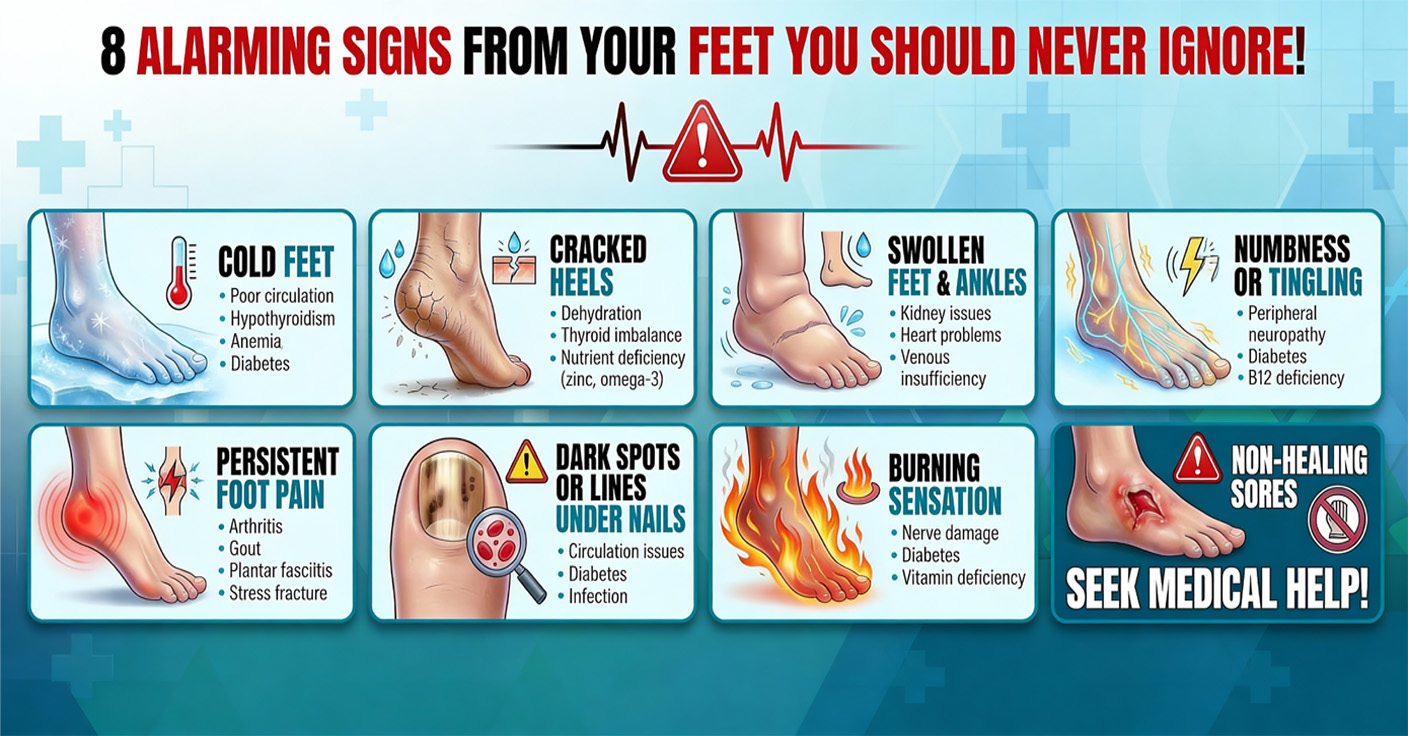
Have you ever kicked off your shoes after a long day, only to notice your feet looking a bit off—maybe they’re swollen, tingling, or just unusually cold? It’s tempting to brush it off as fatigue or bad footwear, but your feet are like silent messengers for your overall health. They bear the brunt of your daily activities, and subtle changes can point to underlying issues that deserve attention. Ignoring these signs might lead to bigger problems down the road, from chronic pain to serious conditions like diabetes or heart disease.
As someone who’s delved into health topics for years, I get it—foot issues feel minor until they aren’t. But with up to 81% of Americans reporting foot discomfort in 2025, according to a recent KURU Footwear survey, it’s clear we’re not alone. This post breaks down 8 alarming signs straight from that eye-opening infographic you’ve seen, drawing on the latest insights from sources like the Mayo Clinic and WebMD. We’ll explore what each sign means, potential causes, practical steps to address them, and when to seek professional help. By the end, you’ll have actionable tips to listen to your feet and protect your well-being. Let’s dive in and turn those warning signals into steps toward better health.
Why Are My Feet Always Cold?
Cold feet aren’t just a punchline for wedding jitters—they could signal something more serious. If your toes feel icy even in warm socks or during mild weather, it’s worth paying attention. This sensation often stems from poor circulation, where blood flow to your extremities is restricted, leaving your feet chilly and sometimes pale or bluish.
Common culprits include anemia, which affects red blood cell production and oxygen delivery; hypothyroidism, where an underactive thyroid slows metabolism; and diabetes, which damages blood vessels over time. According to the Mayo Clinic, peripheral artery disease (PAD) is another key cause, where narrowed arteries reduce blood flow to the legs and feet. In fact, a 2024 CNN article notes that foot symptoms like this can indicate cardiovascular diseases or even neurological issues.
So, what can you do? Start with lifestyle tweaks:
- Boost circulation: Try gentle exercises like walking or ankle rotations for 10-15 minutes daily. Aim for 150 minutes of moderate activity per week, as recommended by the American Heart Association.
- Warm up wisely: Use wool socks or heated insoles, but avoid direct heat sources like hot water bottles to prevent burns, especially if you have diabetes.
- Dietary fixes: Incorporate iron-rich foods (spinach, red meat) for anemia or iodine sources (seafood) for thyroid support. Consult a doctor for supplements.
If cold feet persist with fatigue or hair loss, see a healthcare provider. They might order blood tests or a Doppler ultrasound. Early intervention can prevent complications like ulcers. For example, one patient I read about in a 2025 podiatry blog ignored this and later discovered undiagnosed hypothyroidism. Don’t let it get that far—your feet are calling for help!
What Causes Swollen Feet and Ankles, and How Can I Reduce It?
Swelling in your feet and ankles, known as edema, can make shoes feel tight and walking uncomfortable. It’s often a sign of fluid buildup due to gravity, but persistent swelling points to deeper issues like kidney problems, heart failure, or venous insufficiency, where veins struggle to pump blood back to the heart.
The infographic highlights heart issues and venous problems, and research backs this up. A Cleveland Clinic summary from 2025 explains that conditions like congestive heart failure cause the heart to pump inefficiently, leading to fluid retention in the lower body. Kidney disease impairs fluid balance, while pregnancy or long flights can exacerbate it temporarily. Stats show that up to 25% of people with diabetes develop related swelling due to neuropathy.
Here’s a step-by-step guide to managing it:
- Elevate your legs: Lie down and prop your feet above heart level for 15-20 minutes, 3-4 times a day.
- Stay active: Low-impact activities like swimming reduce pressure on veins.
- Watch your salt intake: Limit to under 2,300 mg daily; opt for fresh foods over processed ones.
- Compression therapy: Wear graduated compression socks (15-20 mmHg) after consulting a doctor.
Home remedies like Epsom salt soaks can help, but if swelling is sudden, one-sided, or accompanied by chest pain, seek emergency care—it could indicate a blood clot. A 2025 study in Frontiers in Endocrinology notes that early treatment prevents chronic issues in diabetic patients. Remember, swelling isn’t just annoying; it’s a nudge to check your heart and kidneys.
Are Cracked Heels More Than Just Dry Skin?
Cracked heels look rough and feel painful, but they’re not always from skipping lotion. Dehydration is a top cause, but the infographic points to thyroid imbalances and nutrient deficiencies like zinc or omega-3s, which affect skin integrity.
Healthline’s 2024 guide details how low humidity, hot showers, and standing for long periods worsen cracks, potentially leading to infections if untreated. Thyroid issues disrupt hormone levels, drying out skin, while deficiencies impair healing. A 2025 report from NCBI links hypothyroidism to higher rates of skin problems in diabetic foot patients.
Tackle it with this routine:
- Moisturize daily: Use urea-based creams after soaking feet in warm water for 10 minutes.
- Exfoliate gently: Pumice stone once a week; avoid overdoing it to prevent irritation.
- Nutrient boost: Eat fatty fish for omega-3s and nuts for zinc. Supplements if blood tests show lows.
- Protective footwear: Opt for closed-back shoes to reduce friction.
If cracks bleed or persist despite care, see a podiatrist—they might test for underlying conditions. One real-world example: A runner in a 2025 podiatry case study found her cracks stemmed from undiagnosed thyroid issues, resolved with medication. Keep your heels smooth and your health in check.
Why Do I Feel Numbness or Tingling in My Feet?
That pins-and-needles feeling, or numbness, can disrupt your balance and daily life. It’s often peripheral neuropathy, where nerves are damaged, as per the Mayo Clinic. Causes include diabetes (affecting over 50% of cases), B12 deficiency, or even alcoholism.
The infographic ties it to diabetes and deficiencies, and a 2025 ADA standard notes asymptomatic neuropathy in up to 50% of diabetics. It starts in feet and spreads, increasing fall risks.
Manage with:
- Blood sugar control: For diabetics, keep A1C under 7% via diet and meds.
- Vitamin checks: Supplement B12 if deficient; foods like eggs and dairy help.
- Pain relief: Over-the-counter capsicum creams or prescribed gabapentin.
- Exercise: Yoga or tai chi improves nerve function.
If numbness worsens or affects walking, get a nerve conduction test. Early action prevents ulcers, as seen in diabetic stats where 7-10% develop ulcers annually.
What’s Behind Persistent Foot Pain?
Ongoing foot pain isn’t just from overexertion—it could be arthritis, gout, plantar fasciitis, or stress fractures, as listed. WebMD outlines how rheumatoid arthritis causes joint swelling, while gout flares from uric acid crystals.
A 2025 KURU report shows 39% of Americans have arch pain, often linked to these.
Steps to ease:
- Rest and ice: 20 minutes icing, elevate.
- Stretches: Calf stretches twice daily.
- Supportive shoes: Orthotics for fasciitis.
- Medications: NSAIDs for inflammation.
See a doctor if pain lasts over two weeks. A 2025 blog shares a gout patient’s relief via diet changes.
Is a Burning Sensation in My Feet Serious?
Burning feet feel like walking on hot coals, often from nerve damage or diabetes. Healthline links it to neuropathy, deficiencies, or athlete’s foot.
2025 stats show rising cases in diabetics.
Relief tips:
- Cool soaks: Epsom salt baths.
- Topicals: Menthol creams.
- Address causes: Vitamin tests, glucose management.
Urgent if with weakness. Prevention via foot hygiene.
What Do Dark Spots or Lines Under Nails Mean?
These can signal circulation issues, infections, or melanoma. Mayo Clinic warns of acral melanoma in nails, more common in darker skin tones.
Diabetes exacerbates via poor flow.
Checklist for concern:
- Irregular borders
- Color changes
- Nail lifting
Biopsy if suspicious. Early detection saves lives.
Why Won’t My Foot Sores Heal?
Non-healing sores scream poor circulation or diabetes. ADA states ulcers affect 6.3% globally, risking amputation.
Causes: Neuropathy hides pain, delays care.
Treatment:
- Clean daily
- Offload pressure
- Antibiotics if infected
Seek help immediately. Daily checks prevent.
Here’s a comparison table:
| Sign | Common Causes | When to See Doctor | Prevention Tips |
|---|---|---|---|
| Cold Feet | Poor circulation, anemia | With fatigue | Exercise, warm socks |
| Swollen Ankles | Heart/kidney issues | Sudden onset | Elevate, low salt |
| Cracked Heels | Dehydration, thyroid | Bleeding cracks | Moisturize, nutrients |
| Numbness | Diabetes, B12 def. | Spreading | Blood sugar control |
| Foot Pain | Arthritis, gout | Over 2 weeks | Stretches, orthotics |
| Burning | Nerve damage | With weakness | Cool soaks |
| Dark Spots | Circulation, melanoma | Irregular | Nail checks |
| Non-Healing Sores | Diabetes | Any open wound | Daily inspections |
FAQs:
What Are the Most Common Foot Signs of Diabetes?
Numbness, burning, non-healing sores, and cold feet top the list. Up to 50% of diabetics have neuropathy.
How Can I Prevent Foot Problems at Home?
Daily checks, proper shoes, hydration, and exercise. Trim nails straight.
When Should I See a Podiatrist for Foot Issues?
If symptoms persist over a week, worsen, or include infection signs.
Are Foot Signs Linked to Heart Disease?
Yes, swelling and cold feet can indicate poor circulation or heart failure.
What’s the Best Way to Treat Cracked Heels Naturally?
Soak, exfoliate, moisturize with urea creams, and boost omega-3 intake.
Can Nutrient Deficiencies Cause Multiple Foot Signs?
Absolutely—B12 for tingling, zinc for cracks.
Conclusion
Your feet aren’t just for getting around—they’re a window into your body’s health. From cold toes hinting at circulation woes to non-healing sores warning of diabetes, these eight signs remind us to tune in and act early. With stats showing foot pain affecting 81% of Americans in 2025, proactive steps like daily checks, balanced diets, and timely doctor visits can make all the difference. Remember, small changes today prevent big issues tomorrow.
What’s one foot sign you’ve noticed, and what will you do about it? Share in the comments below, subscribe for more health tips, or try elevating your feet tonight. Your body will thank you—let’s step into better health together!
